


Walking dogs in the rain
At Gentle Steps, we have been out there walking dogs in the rain in Newcastle every day for around five weeks now. So, I thought it was time to write a bit about the impact of this weather on our dogs and why walk refusal is a real thing when it’s pouring down. Over the past few weeks, we’ve seen dogs from pugs to labradors refuse to walk – all of them sensitive souls and here’s why…
More than just “not liking” rain
It’s the beginning of February 2026, and rain seems to have come to stay (how many weeks is it now?), and many sensitive dogs are badly affected by the constant rain. It would be easy to think, “My dog doesn’t like getting wet, so they don’t enjoy walking in the rain.” But is that all that’s involved? Let’s look at the bigger picture to see what’s really going on.
Dogs are sensory creatures. If they live in a city in the modern world, then I think it’s fair to say they are constantly challenged by things they don’t understand. These range from a reversing lorry that’s rumbling, vibrating and beeping to the restriction of a lead when walking. It could be the kitchen appliance you just bought or why you don’t want them to walk on someone else’s garden. It’s all so confusing.
Their overriding concern is DO THEY FEEL SAFE? And they constantly use their senses to glean clues that help them answer that question. They rely on sensory information to make sense of their world, and while this evidence is critical, it can easily become overwhelming.
The dog’s sensory equipment

Dogs have at least 9 senses:
- Smell,
- Hearing,
- Touch,
- Sight,
- Taste,
- Balance,
- Temperature,
- Pain,
- Time.
These senses constantly signal information from the surroundings to the brain via sensors, sometimes triggering strong emotional or hormonal responses. All of which informs their body whether they feel comfort, familiarity, and safety or discomfort, newness, and threat. Sensitive dogs are those who are easily overwhelmed by sensory information, sometimes just from one sense (for example, sound-sensitive or touch-sensitive), or by generalised sensitivity to new, busy, or challenging situations.
Dogs don’t understand rain, they just experience it!
So back to rain. We sort of understand rain as an inevitable feature of our weather in most areas of the world. We may even understand it more scientifically as water that has evaporated from our rivers, lakes, and seas, then condenses in clouds, from which it falls back to Earth as water droplets.
Dogs don’t understand rain. When it’s raining so hard that Raffi is reluctant to go out in the back garden for a wee, he’ll still run optimistically to the front door if I pick up his lead. When I open the door, he’s almost surprised (and definitely disappointed) to see it’s just as wet at the front as the back!
Rain is something dogs experience. Something that floods their senses (pun absolutely intended!) and their discomfort goes way beyond being wet, though that is certainly part of it for some dogs. Beyond that, let’s look at how the nine senses are affected by rain.
Smell
A dog’s primary sense is olfaction – scenting – smelling, and rain massively alters scent. During and after rain, old, familiar neighbourhood scents are diluted and washed away. At the same time, new scents appear and are amplified. Rainwater run-off carries scents from drains, hedges, trees, soil and other less familiar places down to street level. Smells are also amplified as moisture lifts scent molecules, making them stronger and more complex. Many dogs find all this newness stimulating and fun. But sensitive dogs are more likely to find it disorienting, as routes they know well no longer smell familiar.
Hearing
Dogs rely heavily on their sense of hearing, which is closely linked to their experience of fear. New and unfamiliar sounds are often perceived as a potential threat and can trigger a stress response. Rain changes the way the world sounds. Firstly, there is the background noise of the rain itself, which can be enough to mask subtle sounds the dog normally relies on. Sounds, such as your footfall or the noise of someone approaching from behind. Traffic noise is also amplified when roads are wet, and all sounds can seem unpredictable and unfamiliar. Some dogs are particularly sensitive to sound, and rain can cause hypervigilance and anxiety.
Touch
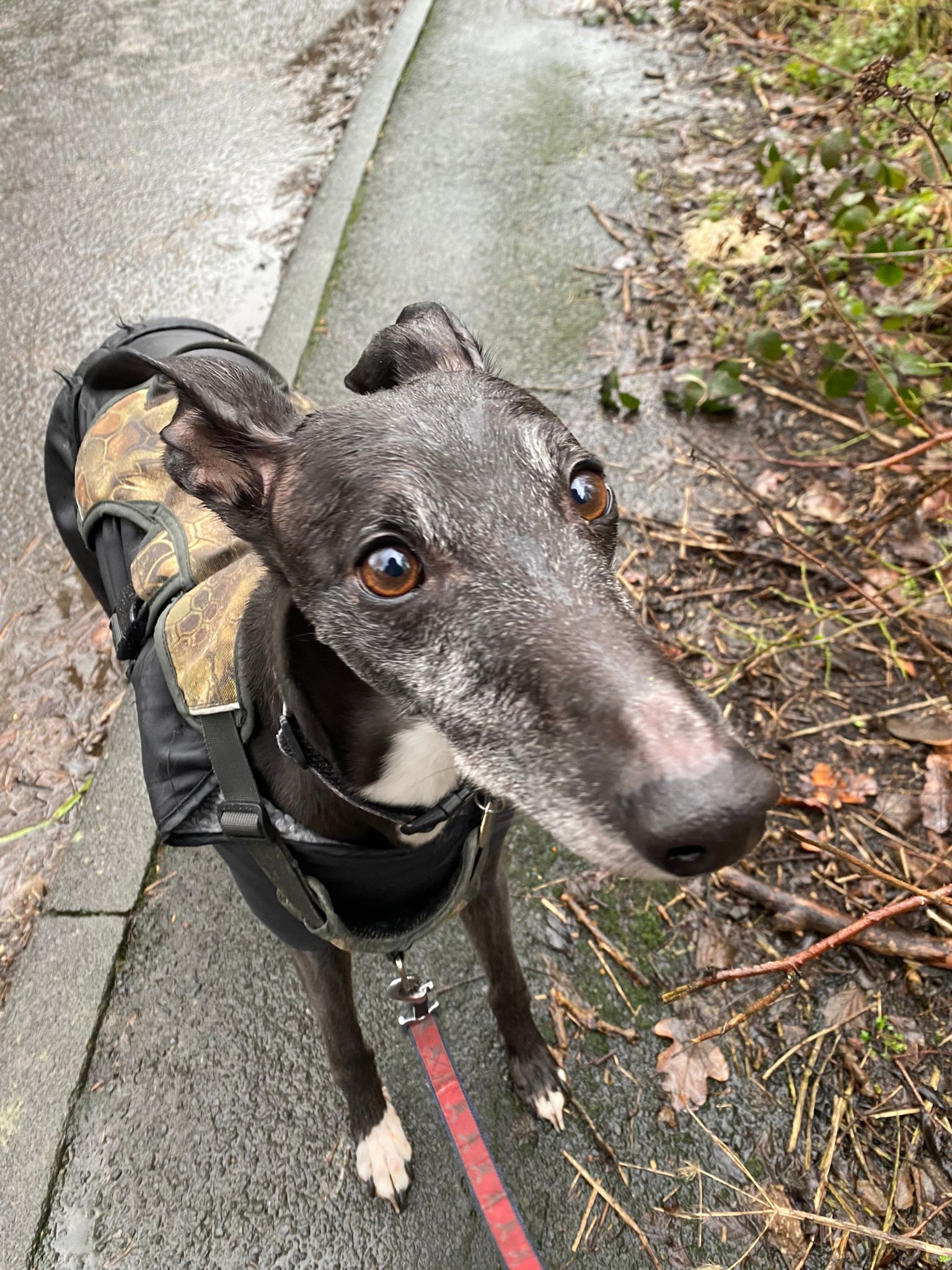
Some of the effects of rain on a dog’s sense of touch, or body sensitivity, can be mitigated by wearing a coat. But then the coat itself can irritate or cause a fear response. There are no absolutes here, and we must learn to work with the specific needs of the dog in front of us. A coat doesn’t protect the face, eyes, or ears, and for most dogs, these are the most sensitive areas. Rain hitting the face can be irritating, even startling. Touch-sensitive dogs are more likely to be affected by rain in this way.
Sight
Vision isn’t as important to dogs as it is to us, but it matters. An overcast, rainy day creates a lack of contrast and poor visibility of movement, essentially blurring the world. Rain causes odd reflections on wet surfaces, which is enhanced by the increased use of headlights on a gloomy day. A rainy world is also visually busy; raindrops bounce and splash, trees drip, and puddles ripple. This can add to a dog’s overall sense of discomfort in the rain.
Taste
The dog’s sense of taste will be affected by a wet world, as dogs taste primarily through scent. Many dogs gently lick interesting smells to intensify them, but this process is less effective in the rain, because scents are already wet. This can either dilute or intensify them.
Balance
The effect of rain on balance is probably one of the reasons why dogs who lack confidence often don’t enjoy walking on wet days. This is particularly problematic if your dog doesn’t just pound the pavements. Even then, the feeling of the world underfoot will be very different. Textural differences underfoot can increase a dog’s confidence over time, but feeling unsteady and slipping on the surface can be particularly hard for sensitive dogs, and often reduces confidence. Understandably, they feel unsafe. Rain renders grass muddy, and wet mud can be almost as slippery as ice!
Temperature
Most dogs (and most humans) associate warmth with comfort and cold with threat. Wet fur changes thermal sensation, and this is particularly challenging for dogs who are lean, short-haired, old or suffer from conditions like arthritis. Again, wearing a coat will help here, unless the coat itself just adds to the discomfort. If your dog gets wet during a walk, be sure to dry them well afterwards and maintain a comfortable environmental temperature. It will feel colder to them if they are damp.
Pain
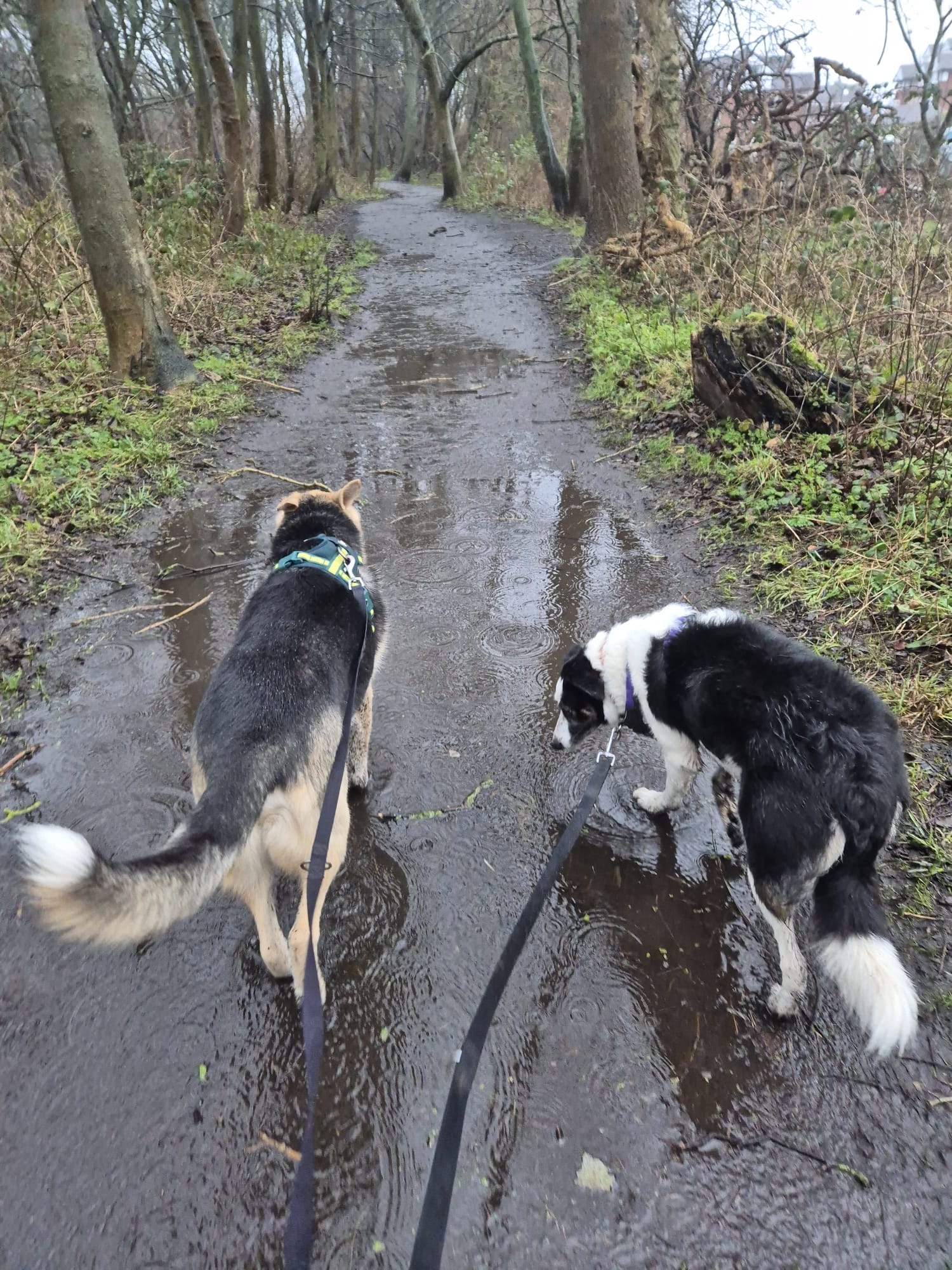
We’ve touched on the sense of pain in thinking about conditions like arthritis, which are badly affected by cold and damp. It’s also always important to remember that a dog who is in pain is generally less resilient and may tolerate the challenges of persistent rain less easily than they would on a good day. Dogs do not need to go out in weather conditions that are detrimental to their well-being. There are many effective walk replacements that fulfil a dog’s need for movement, scenting, stimulation, and social time with you, and can be used indoors when a dog is struggling.
Time
Dogs have a great sense of time. Try to push their teatime back by an hour, and you’ll see this in action. I have no science to back this up, but I suspect many dogs experience their walk in heavy rain as “too long”, exactly as we do. If you’re out there thinking I wish I were at home, stop for a moment, consider everything we’ve said and take a good look at your four-legged friend. They just might agree!
When walking your dog in the rain, see if you can work out what they are sensitive to.
In conclusion, some dogs will become more stimulated and excited on a rainy walk; new smells, new information, new puddles to play in! Others may feel overstimulated, unsettled, anxious, uncomfortable, and even afraid. Too much “new”, too much sensory overload, too much everything! All dogs should be seen and listened to. If you’re watching a dog struggling when you walk them in the rain, ask if you could do things differently. Or do something else entirely?
Alison Campbell February 2026